How Carriers.
Calculate Trailer Space
Not all freight is billed the same way.Carriers may use one of three methods depending on the shipment's size, height, and stackability.
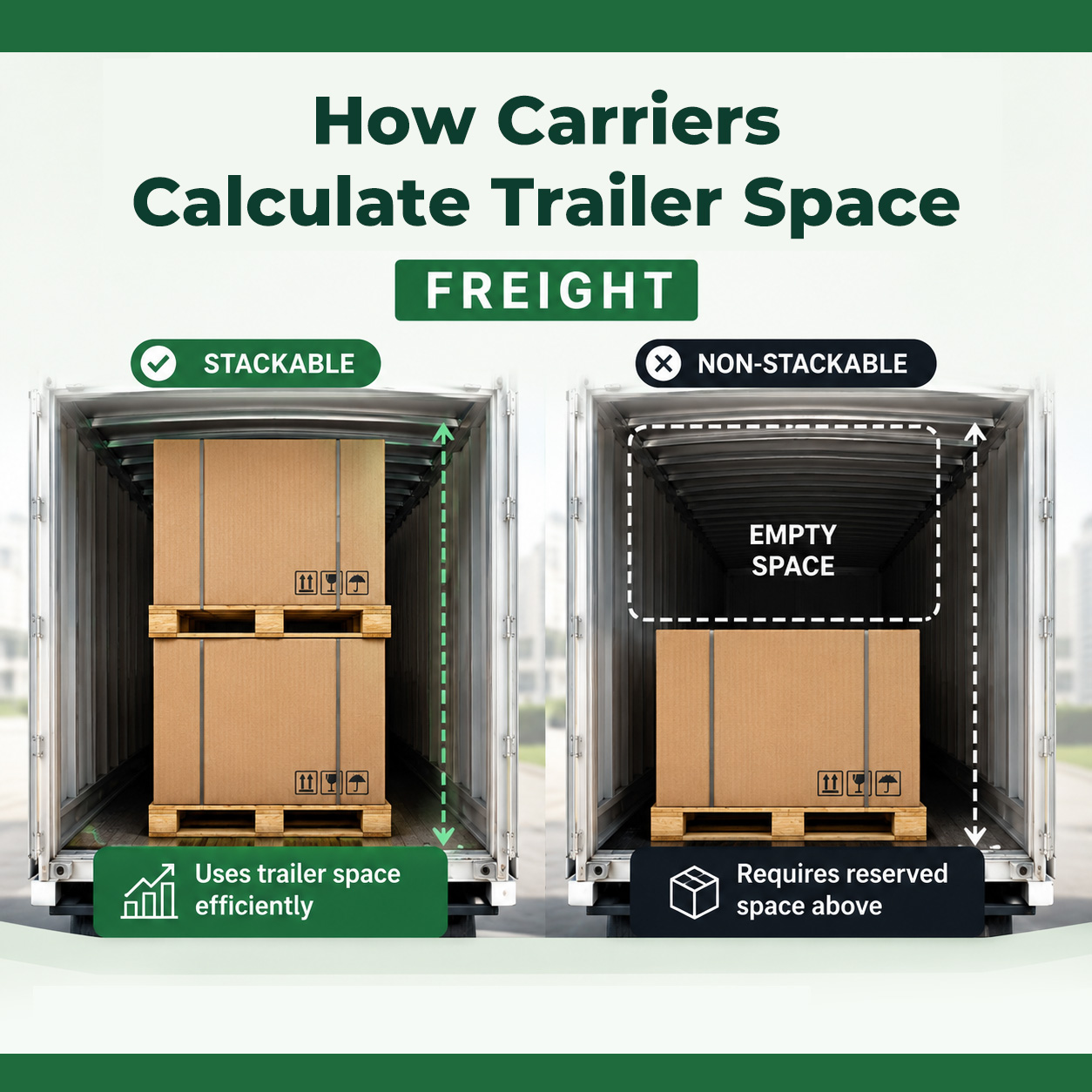
Uses trailer space efficiently
Requires reserved space above
What Does Stackable Mean?
When shipping freight through an LTL (Less-Than-Truckload) network, weight is only one part of the pricing equation.
Many shippers are surprised when two shipments with the same weight receive very different rates. In most cases, the difference comes down to how much trailer space the freight occupies and whether the shipment can be stacked.
Understanding the difference between stackable and non-stackable freight can help you avoid unexpected charges and get more accurate shipping quotes.
What Does Non-Stackable Mean?
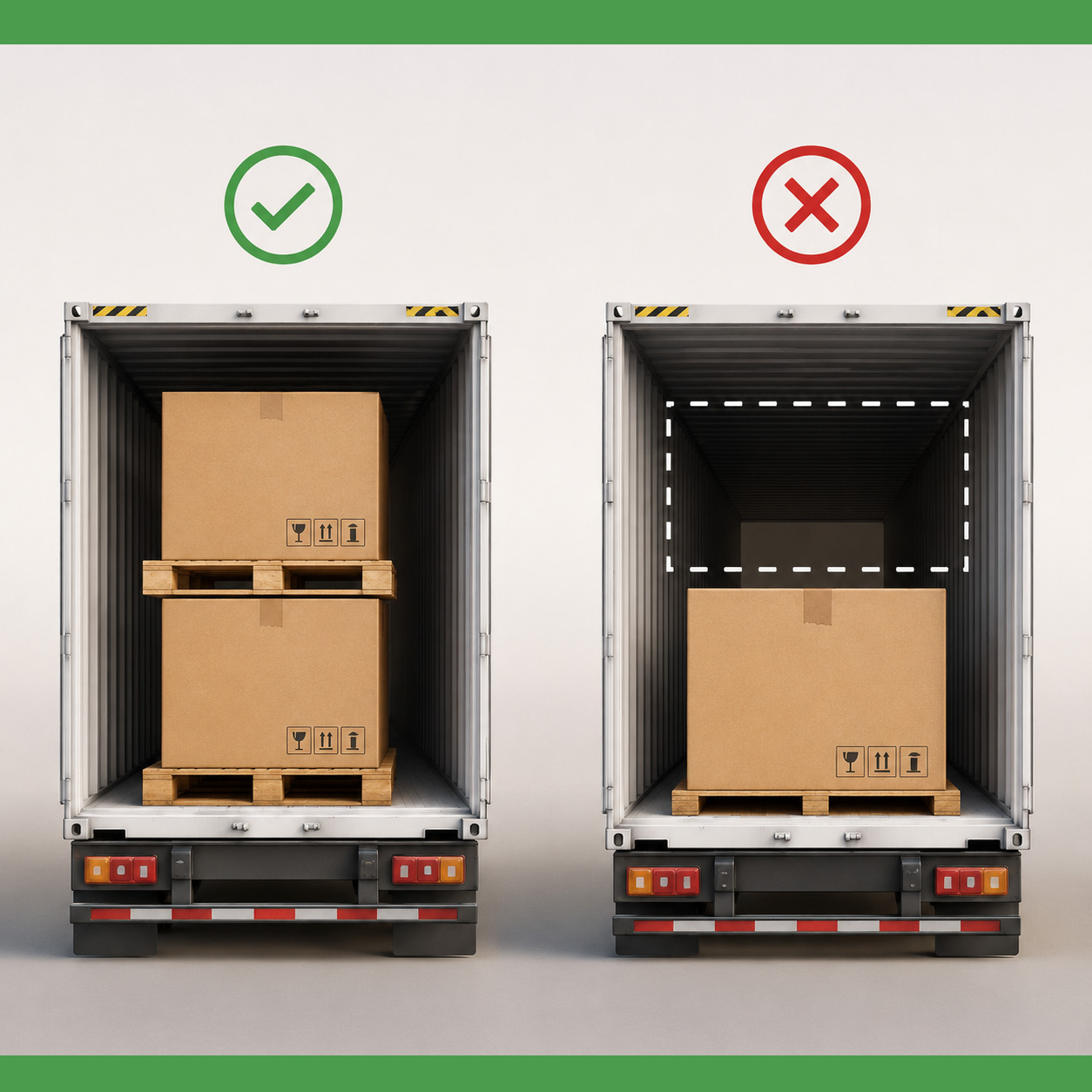
A shipment is considered stackable when another pallet or piece of freight can be safely loaded on top of it during transit.
Because the carrier can maximize trailer space, stackable freight is generally charged based on its actual dimensions.
Examples of stackable freight include:
- Cartons on standard pallets
- Shrink-wrapped consumer goods
- Boxed products with a flat top surface
- Freight that can safely support additional weight
For stackable shipments, carriers typically calculate charges using the shipment’s actual cubic volume.
Actual Cube = Length × Width × Height
Actual Cube
Length × Width × Height
Best for Stackable FreightCube to Roof
Length × Width × 96"
Used for Non-Stackable FreightLinear Cube
Based on Trailer Length
Used for Long FreightWhy Non-Stackable Freight Costs More
LTL carriers sell trailer space.
If a shipment prevents other freight from being loaded above it, the carrier loses usable capacity.To account for this, many carriers use different cubing methods for non-stackable freight. Instead of charging only for the actual dimensions of the shipment, they may charge for the entire height up to the trailer roof.
This is known as Cube to Roof.
Actual Cube vs. Cube to Roof
Actual Cube
Actual Cube measures the true size of the shipment:Length × Width × Height.This method is commonly used for stackable freight and smaller shipments.
Cube to Roof
Cube to Roof assumes the shipment occupies the full trailer height: Length × Width × 96″. Even if a pallet is only 50 inches tall, the carrier may calculate space as if it extends to the roof of the trailer. This method is commonly applied to non-stackable freight and taller shipments.
Because the carrier cannot utilize the empty space above the shipment, the freight consumes more effective capacity.
What Is Linear Cube?
For long, oversized, or high-volume shipments, carriers may use a third method called Linear Cube.Rather than calculating cubic volume, the carrier charges based on the amount of trailer floor space occupied.
This method is often used when freight:
- Is over 10 feet long
- Occupies significant trailer length
- Prevents efficient loading of surrounding freight
Linear Cube pricing is based on the linear feet of trailer space consumed.
Common Carrier Rules
While each carrier has its own guidelines, many follow similar principles:
| Shipment Type | Typical Cubing Method |
|---|---|
| Stackable freight under 72″ high | Actual Cube |
| Non-stackable freight over 48″ high | Cube to Roof |
| Long freight over 10 ft | Linear Cube |
| Large multi-pallet shipments | Linear Cube |
These rules help carriers determine how much trailer capacity a shipment consumes.
Get an Accurate Freight Quote
Before requesting a freight quote, make sure you know:
- Pallet dimensions
- Total weight
- Number of pallets
- Whether the freight is stackable
- Any special handling requirements
Incorrect stackability information is one of the most common reasons for freight reclassification and additional charges.
Providing accurate shipment details upfront helps ensure a more accurate quote and smoother transit experience.
How to Avoid Unexpected Charges
At UUCargo, our online freight platform allows you to enter pallet dimensions, weight, and shipment details to receive instant freight quotes from multiple carriers.
If you are unsure whether your shipment should be classified as stackable or non-stackable, our team can help review the shipment before booking.
Get a quote today and compare rates from trusted LTL carriers across Canada and the United States.